Wednesday, November 1, 2017

Fairy rings: The Folklore and the Science


"WILDLIFE WEDNESDAY"


The Folklore and the Science of Fairy Rings
Recurring Fairy Ring Snead, Al


Common Name:     Fairy ring, Elf ring, Fairy circle, Elf circle, Pixie ring, etc.

Scientific Name :    Hocus pocus nonsenseicus  


The magical fairy ring, where elves, fairies, pixies, and the like come to dance and play.  Through much of European history fairy rings have been a part of much folklore.  Once viewed as an off-limits area for us mere humans,  the reality behind these rings is a little less mystical than tales of dragons and tiny magical beings, but the science behind this interesting phnomenon is still pretty cool.  


 A  little science behind fairy rings


What causes them?


These imaginative circles are the result of a particular pattern of mycelium growth. Mycelium is the underground organism that produces the reproductive fruit bodies that we know as mushrooms. This relationship is sometimes explained by comparison to an apple tree. If we think of mushrooms as apples, then the mycelium is the tree from which they fruit.In this analogy the tree is underground, but you get the idea. ;)In the case of a ring, the mycelium starts as a single point and grows in a circular shape. It continues to push outwards in an attempt to consume more nutrients. As it exhausts the nutrients on the inside of the circle, it will widen further and further as it looks for a new food source.This process results in an ever-growing circle, that doesn't start to grow back inwards or cross over on itself because there's no new food on the inside of the circle. The mycelium may have started at one point, but soon it has nowhere to go but in an outwardly, circular direction.


Although not uncommon, fairy rings don't just happen anywhere. Multiple factors influence this circular growth pattern, including soil type and condition, amount of nutrients in the soil, obstructions underground, and dirt composition. The ground needs to be even and well composed, a reason why you'll often see them pop up on lawns.

The chance exists that you've seen more fairy rings than you realize. Although we only notice them when they produce mushrooms, the circular mycelium underground is always there and growing. 


There are about 60 different species of mushrooms that produce fairy rings; Marasmius oreades, Agricus campestris, Lycoperdon spp., and Scleroderms spp. being the most common.


 Now that I have sucked the fun out of Fairy rings by being all sciency and stuff here are some fun facts:
  • The rings will continue to grow over time, resulting in a pattern that can be thousands of feet wide, and hundreds of years old.
  • One of the most impressive rings ever was found in France, and suspected to be about 2,000 feet (600 meters) wide and over 700 years old!
  • Time, environmental factors, and animal droppings may replenish the nutrients in the center of the ring once it is wide enough. This can result in a second ring growing inside the first.
  • Depending on the soil and the weather, a ring may expand radially from 3 to 19 inches per year.
  • There are many other fun names for this phenomenon, including elf ring, pixie ring, and fairy circle.


Fairy Rings are still a part of folklore today and I feel that even though we understand the science behind them, they are sure to inspire the thoughts and imagination of generations to come.


Wednesday, October 25, 2017

Alabama Fox Squirrel

"WILDLIFE WEDNESDAY" 


Alabama Fox Squirrel


Scientific:  Sciurus niger

Common:  Fox Squirrel, eastern fox squirrel, Byrant's squirrel


This squirrel is the largest species tree squirrels native to North America.  They are found primarily on the eastern United States.  Their range extends into Canada but they are not considered native to the New England States and are seldom seen there.  They prefer an open forest without a dense under-story.  

The Fox Squirrel's body length is typically from 15" to 27" in length with a tail in excess  of 12".  Adult males can often reach 3lbs.  The color is probably the most varied of all squirrels.  They are distinguished by black, red, grey, and silver hair and often they will have a reddish tail.  One characteristic, that is fairly consistent, is the black face mask with the tips of the nose and ears being white. 

The fox squirrel is an opportunistic feeder but primarily feeds on nuts, acorns, seeds, fruits, buds, insects, and fungi.  Most of their water needs are obtained from succulent vegetation or licking dew from leaves.  (The one in the photo is clutching some form of food tightly in his right paw)


Wednesday, October 18, 2017

Little river canyon: "Pass it on down"

"WILDLIFE WEDNESDAY" 


"Pass it on Down"


The country music group "Alabama" ,one of the best selling music groups of all time, wrote the song Pass it on down to tell a story about a near magical place in Northeast Alabama called Little River Canyon.  


Little River Canyon is recognized as the deepest canyon east of the Mississippi river.  The Little River Canyon National Preserve is truly a natural wonder.   This Saturday October 21st they will be celebrating the 25th anniversary of the preserve.  


Little River Canyon National Preserve – Alabama’s most visited National Park

This article linked above tells a good history of how "the canyon" became a national preserve.  I vividly remember talking with a friend back in the early 90's who grew up in the area. He and his family were not in favor of the national preserve.  This article details some of that sentiment and  
highlights much of the improvements that have come from the development of the national preserve.  


 If you live in Alabama and have never been to the Canyon, 1st off shame on you, 2nd you should make a priority to catch the impressive views in the preserve this fall as the leaves change colors.  The 25th anniversary celebration will be a great time to visit and learn about the history and natural wonders of this place.   


UNTIL NEXT WEEK  

BE SAFE, BE CAREFUL, BEHAVE, DON'T DO ANYTHING ILLEGAL, IMMORAL, UNETHICAL, OR JUST PLAIN STUPID


Wednesday, October 11, 2017

Biological Succession

"WILDLIFE WEDNESDAY" 


"THE RED FIELD"


"Biological Succession"


This photo is a picture of what our family has always affectionately referred to as the"Red field".  This land has been in the same family for many many generations.  The soil has a very red color much different than that of the surrounding soil types of the area.  Now I realize that it doesn't look much like a "field" in this photo.  In my memory it was once a vast corn field as large as anything you would see in the midwest.  


As a young boy I vividly remember getting to take a turn guiding that old Ferguson tractor as it pulled a single bottom plow through that red dirt (I'm sure my brothers had fond memories of the same). Those corn rows stretched on for what seemed forever.


You may be wondering why I have posted a picture of a forest and am talking about it being a corn field. The word Agriculture comes from the latin Ager, meaning "field" and cultūra, meaning "cultivation or growing". Somewhere along the lines, our family decided to stop using the land for agriculture purposes and then a natural cycle took control . No more humans "tending the land" left it up to nature to take care of it. Biological sucession is the resulting process. It is the process where one wave of growth takes the place of another.


This plot of land is now a typical northeastern Alabama mixed deciduous forest. It is the product of many things that happened to it in the past. Soil, climate, geology, lumbering and farming have made it what it is today.
Natural forces continue to work to produce change. As the new
vegetation covers the scars made by man, one wave of growth sets the stage for another. Slowly the forest matures, and one kind of plant or animal replaces another in a natural cycle called succession. As succession runs its course, some elements of the present environment may not be here someday because
they won’t “fit” this place anymore. The elements of succession are very evident in the differing ecosystems that exist in the Southern landscape we call home. The study of succession remains at the core of all ecological studies.


Each of the those waves have a term that science guru's use to describe them. Pioneer (early), Intermediate, Climax, Primary, Secondary, Cyclic, Regeneration, Trophic Cascade etc. They are all just terms to describe change. The only thing that I can guarantee about this world is that everything changes. Everything is linked together. If one part changes, for whatever reason, everything else tends to have a change as well. The beauty of this system is that the earth has a tendency to follow certain rhythms and orders. That's what the study of succession is all about. It is a bit hard to appreciate the changes since they often take place over the course of many many years. Change is always happening in all forms of life. We seldom stop our busy world long enough to notice it.


A good friend tagged me in a Nat Geo Video earlier this week and I think it fits this "WW" article very well. It is about how succession can be effected by wolves. The wolves of yellow stone changed the way biological succession was going. When they were reintroduced back into the ecosystem things started changing back to a more natural state. I will post a link to this video below.


Aldo Leopold once said that "the oldest task of the human race was to live on a piece of land without spoiling it". Succession happens because of changes, natural and unnatural. The key is trying to understand how our plans are effecting the cycle.


https://www.youtube.com/watch?v=ysa5OBhXz-Q


UNTIL NEXT WEEK  
BE SAFE, BE CAREFUL, BEHAVE, DON'T DO ANYTHING ILLEGAL, IMMORAL, UNETHICAL, OR JUST PLAIN STUPID

Wednesday, October 4, 2017

Conoclinium coelestinum: Blue Mistflower, Wild Ageratum, Mistflower

"WILDLIFE WEDNESDAY" 


"Blue Mistflower"


Scientific: Conoclinium coelestinum


Common: Blue Mistflower, Wild Ageratum, Mistflower


Blue Mistflower is native to the eastern part of the United States, from zones 5 – 9. Blount County Al was where this specimen was observed. Blount county and much of Northeast Al is in zone 7b (I may do a "Wildlife Wednesday" on hardiness zones. Often plants and animals stick to certain temperature/climatic zones). Mistflower is often found on sandy forest edges and creek banks. That makes Sand Mountain a perfect place for it to call home. It will grow to about 3 feet tall. It has triangular shaped leaves that are positioned opposite each other. The plant forms clusters of bright blue, violet, or white cone shaped flower heads that are about 1/4" long. The flowers appear from June - November. Once established, it spreads by underground rhizomes to quickly colonize large areas, leading some to consider it an invasive pest plant. A cold winter will kill it to the ground, but it comes back in the spring. Butterflies and bees are known to love this plant, visiting it in droves. It’s a nice addition to a native butterfly garden as a nectar plant.
 There is some very good information on this and other wildflowers and plants in Alabama here:  http://floraofalabama.org/Plant.aspx?id=652

Although the map shows this plant to not be present in Blount county, but these photos beg to differ.  I am located very close to the Marshall county line where they are supposed to be present so I guess that is good enough for me.....


UNTIL NEXT WEEK  
BE SAFE, BE CAREFUL, BEHAVE, DON'T DO ANYTHING ILLEGAL, IMMORAL, UNETHICAL, OR JUST PLAIN STUPID

Wednesday, September 27, 2017

Passiflora incarnata: Purple Passion Flower

"WILDLIFE WEDNESDAY" 


"The Maypop and the Ocoee River"


Many of us that grew up in the South, spend many childhood hours stomping "maypops".  Hence the common name "maypop"  the fruit of the Purple Passion Flower (Passiflora incarnata) will make a loud POP when a little boys foot comes down on it....  or when it bangs into the chest of one of his friends.......  (maypop wars were pretty fun).  


Scientific name:  Passiflora incarnata

Common name:  Purple Passion flower, Maypop, Wild Apricot 


So What does this have to do with the Ocoee River?
  As most that know me personally, know that I spent a good portion of my life on and around the whitewater rivers.  I have been an avid whitewater kayaker since about 1990 when my big brother let me paddle his kayak down the Mulberry and Locust Fork rivers in Alabama.  As I got older we soon ventured north to the dam controlled waters of the Ocoee river in southern Tennessee.  This was one of the only places to be able to paddle whitewater during the summer months.  I grew very fond of the area and its history.   In my early 20's I even called this place my home.  I had a house right on the Ocoee river just below the No.1 dam. Man those were some good times!   
Because of my love for the area I started learning more and more about the history of the area. I was somewhat shocked to find out that the river's namesake, "Ocoee", was the good ole "maypop".  The Cherokee in the area called Passiflora incarnata by the name "ocoee" and because of the prevalence of the plant in the area the whole area became know as Ocoee.  The Purple Passion Flower is also the Tennessee state Wildflower.  

The fruit is good for uses other than for 12yr old boys amusment.  It has historically been used as an herbal medicine for treatment of anxiety and insomnia.  The fruit is edible and is commonly used to make jelly and jams.  

This plant is commonly thought of as an agricultural weed, but is often grown in gardens and landscapes for its flower.  It can be very aggressive in its growth and can be very invasive in the right conditions. 


UNTIL NEXT WEEK  
BE SAFE, BE CAREFUL, BEHAVE, DON'T DO ANYTHING ILLEGAL, IMMORAL, UNETHICAL, OR JUST PLAIN STUPID


Wednesday, September 20, 2017

Callicarpa Americana (Beauty Berry)

"WILDLIFE WEDNESDAY" 


"American Beautyberry An Explosion of Fall Purple"


Scientific Name:  Callicarpa americana 
Common Name:  American Beauty berry, Purple BeautyBerry, Sourbush, or Bunch berry  


American Beautyberry is a multi stem shrub that grows about 3 to 5 feet tall with fuzzy, green leaves and produces bunches of bright purple berries. This is an edible berry that is very common to the Southeast. Their flavor is very light and sweet. The berry was often made into a jelly by our ancestors.
This plant works well in landscapes for attracting wildlife. It will bring a nice early fall color splash to the landscape. This plant is in full bloom right now at my farm in North Alabama. In fact, I took these pictures this morning 9/20/17. The berries typically ripen from early September through October each year.


The scientific name, Callicapra in greek is derived from "callos" which means beauty, and "carpos" which means fruit.


More info from the USDA  American Beautyberry

UNTIL NEXT WEEK  

BE SAFE, BE CAREFUL, BEHAVE, DON'T DO ANYTHING ILLEGAL, IMMORAL, UNETHICAL, OR JUST PLAIN STUPID

Wednesday, September 13, 2017

Get Outside! Flint Creek Multi Use Trail (Bankhead National Forest) Get Outside!

"WILDLIFE WEDNESDAY" 


Get Outside!

   Flint Creek Multi Use Trail 

(Bankhead National Forest)


Wildlife Wednesday is all about encouraging people to take a look around at the natural world, to spend time outside exploring, and ultimately to get away from the civilized life of concrete, pavement, air conditioning, television, and couches.  This week we are talking about getting outside to explore the Bankhead National forest's Flint Creek Multi Use Trail.  A "multi use trail"  is one that is designed to allow access to areas that are suitable for hiking, mt. bikes, horses, and OHV's.  


There are thousands of miles of roads and trails on public lands that are appropriate and accessible for Off Highway Vehicles (OHV's) use. OHV's are a fun and exciting way to experience America's natural treasures. Here in the South we love our OHV's,  whether it be an ATV, UTV/SXS, Dirt bike, or 4x4 (jeep, truck, etc.).   

Backcountry roads and trails provide a wide range of recreational opportunities for responsible Off Highway Vehicle users on public lands. These opportunities range from vehicle touring to vehicle access for hiking, hunting, fishing, and other public land uses, as well as unconfined vehicle use at designated "OHV Open Areas". Fees and seasonal restrictions related to OHV use may vary from site to site.  ($3.00 per rider at Flint creek).


Flint Creek Trails

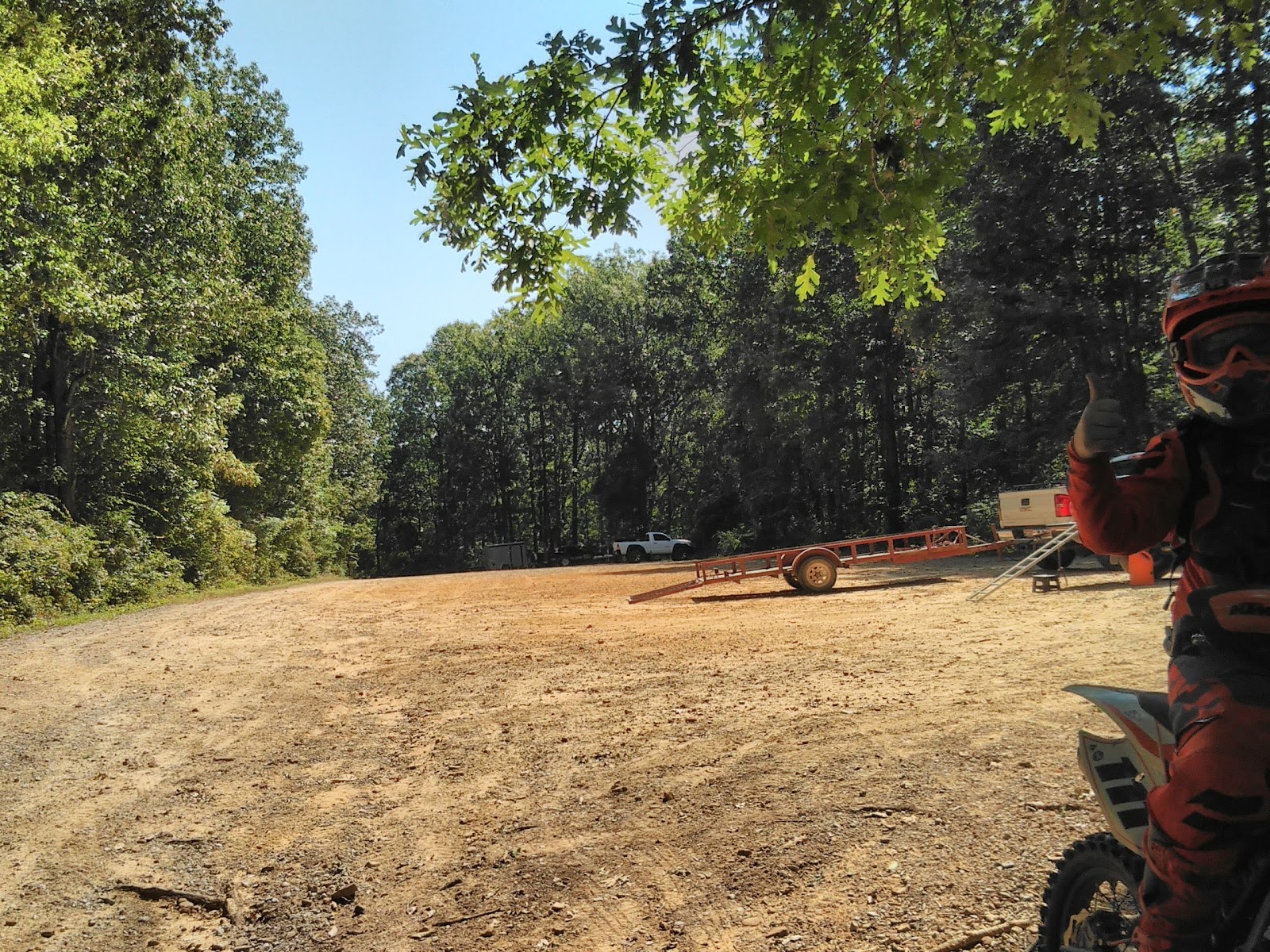
We recently decided to take a trip to check out this OHV area in Bankhead.  
My son and I love to ride dirt bikes and every chance I get to go to a new location I normally jump at it.  My son often gets annoyed when I like to stop on the side of the trail to check out a rock formation, waterfall, or cool looking plant.  The Flint Creek trail system did not disappoint. It is just under 17 miles of trails. Depending on the season there may be lots of wildflowers, rushing water and plenty of rock formations.  The trails are not very difficult by our standards, but please use your own judgment if you decide to take on the adventure.  This area is very remote and recovery efforts would be a real pain.    


Practice Good Stewardship of OUR Trails / Roadways:

You can help to take good care of our trails and roadways so that others may enjoy these areas for years to come by practicing some of the following actions:

Don't Litter... take along a trash bag or other receptacle for collecting your trash so that you can deposit it in the proper trash receptacle.

Make sure that you ride on the designated trail or roadway in that area. Check with your destination ahead of time to ensure that the area you plan to ride in is currently allowed.

Don't ride in areas where it is not permitted. These areas have been declared "off limits" to riders to protect wildlife, vegetation, or for your safety.

Leave gates as you find them.

Yield the right of way to those passing or traveling uphill.

Assist in the management of your public lands by reporting inappropriate behavior, natural resource damage or hazards you may encounter.

Respect the environment and other trail users. By using common sense and common courtesy, what is available today will be there to enjoy tomorrow.

To learn more about responsible OHV riding, go to the Tread Lightly website at:

http://www.treadlightly.org


While on the trails we encountered several other users on atv's, utv's. and horses.  This area is easy to access and has a nice gravel parking lot.  Camping is allowed in the forest.  The maximum width of OHV is fifty inches.  This knocks out many of the RZR/UTV riders.  The trails are well maintained and lots of fun.  
(parking area)

The National Forest website hosts some information about the trails available in Alabama. 


Invite some friends and get outside to enjoy the forests on your OHV!


UNTIL NEXT WEEK  

BE SAFE, BE CAREFUL, BEHAVE, DON'T DO ANYTHING ILLEGAL, IMMORAL, UNETHICAL, OR JUST PLAIN STUPID

Wednesday, September 6, 2017

A NEW DANGER IN THE FORESTS


"WILDLIFE WEDNESDAY" 


"A New Danger In The Forests"


There is a new danger that lurks in the Southern Forests.  Hikers, campers, mountain bikers, paddlers, hunters, and all outdoorsmen should become familiar with this new and present danger that will plague the woods that we frequent for some time.  DEAD TREES!  During 2016 the southern U.S. suffered a historic drought that covered 100% of the state Alabama and much of the surrounding states.  With abnormally high rainfall amounts this summer, most people feel that this we have more than made up for the shortfall of water last year and that our problems are in the rear view mirror.  This is certainly not the case for those of us who spent a lot of time in the woods.  

 Many trees across the southern forest did not make it through the drought of 2016 and that was evident this spring when many did not put on leaves with the rest of the deciduous trees that come to life in late February through April. The stress of the drought was simply too much for them to live.  Last year, many trees had to dig deep into their reserves to survive the drought.  This puts the tree in a stressed state and with any additional attack, be it from lack of water, insects, fungus, disease, etc.  the tree will have a hard time recovering.   The effects of the drought will not be fully seen on the forests for several years after a drought. The US Forest Service has some good info about the effects of drought on forests if you care to dig deeper into the science of what happens:  https://www.fs.fed.us/science-technology/climate-change/drought-forests-and-rangelands
 It does not take much to find an area of dead trees in the southern forests.  As you drive along if you look up at the mountain sides you will likely see areas of trees that have lost their leaves.  Often they stripe the mountain with horizontal lines.  These areas that are shallow in topsoil were particularly easy targets for the drought to take its toll.  I have personally lost several hundred trees on my farm. Many of which did not show any signs until the last few weeks.    The economic impact to the forestry industry may be great over the next several years.  The ecological impact will be significant as well.  The immediate danger will come in the form of dead and decaying tree trunks and limbs that have made the forest a minefield for those who spend time there.  


As fall approaches and the cool air starts to move in, the southern woods start to come alive with people who set out to spend time in nature.  Hunters fill the woods looking to bag game.  Campers set out to spend time in the forest.  Hikers travel down those footpaths through the forests.  Kayakers, Mountain bikers, rock climbers, etc.  all are about to venture out into a land that has changed quite a bit in terms of safety.  So when you head out to enjoy the forests this fall, please keep in mind you are entering into a mine field from above.  

In forestry the term "Widowmaker" is often used to describe a detached or broken limb or a tree top and denotes the hazards that such features cause. The term "Snag" is used to refer to a standing, dead or dying tree, often missing a top or most of the smaller branches.


The woods will soon be full of widowmakers and snags. The snags and dead branches play important roles in the world of ecology making up an important part of the structural component in forest communities. Many cavity nesting wildlife will use these snags as well as them being a home for the decomposers. This is a benefit to these species, but the purpose of this article is warn of the dangers that are present to humans. Hence the name (widowmaker), these branches and snags can fall at any time and can easily be fatal. Often hunters are often in the woods during dark hours and often alone. It will be particularly important for them to take precautions of these dangers. Windy conditions will increase the dangers.


SO WHEN YOU HEAD OUT TO ENJOY THE FORESTS, PLEASE BE MINDFUL THAT THERE IS AN INCREASED LEVEL OF CAUTION THAT SHOULD BE APPLIED TO YOU REGULAR FOREST SAFETY MEASURES.  A HEIGHTENED SENSE OF AWARENESS OF THE THINGS THAT ARE ABOVE SHOULD BE APPLIED.  


SPREAD THE WORD!


UNTIL NEXT WEEK  

BE SAFE, BE CAREFUL, BEHAVE, DON'T DO ANYTHING ILLEGAL, IMMORAL, UNETHICAL, OR JUST PLAIN STUPID


Wednesday, August 30, 2017

Pollinators

"WILDLIFE WEDNESDAY" 

Pollinators


Pollinators 
are an essential part of the web of life.

 In high school I wrote a paper in senior, honors, AP, geekspeak, nerdism, English class that I called  "The web of life". I had recently read a book by Rachel Carson entitled "Silent Spring". My paper was based on my observations from the book and probably a little plagiarism from some other sources also..... Who knows? Obviously, I'm not a grammar Nazi, nor am I really good at writing, BUT..... I poured my heart into writing this paper with hopes that I would change the world's view about the importance and relevance of all things wild.
I felt just like Ralphie from "A Christmas Story"


In case you haven’t seen it, the movie is about 9-year-old Ralphie Parker and a central plot line is his quest to get a Red Ryder BB Gun. Whenever he asks for the gun for Christmas, he invariably is told, “You’ll shoot your eye out.”In one sequence in the movie, Ralphie’s fourth-grade class is told to write “a theme” on the subject, “What I Want for Christmas.” Ralphie, who ordinarily doesn’t like theme-writing, views the assignment as a primo opportunity to end the “conspiracy of irrational prejudice against Red Ryder and his peacemaker.”As he turns in his theme, he fantasizes about garnering an A+ (make that multiple plusses) on it.“I knew I was handing Miss Shields a masterpiece,” says the narrator, the adult Ralphie. “Maybe Miss Shields in her ecstasy would excuse me from theme writing for the rest of my natural life.”

Unfortunately, it doesn’t quite work out that way. Miss Shields gives him a C+ on the essay and notes at the bottom, “You’ll shoot your eye out.” As you might imagine, Ralphie is devastated.
My paper was met with much the same fate. Ms. G&%$*@! must not have liked my stance, because she knit picked my paper to a "C" and wrote on it in red "You don't really think this could happen do you?" She always loved me and seemed to even give me a bit of favoritism at times, but this paper must have struck her wrong. I ended that year with an excellent A+ average, but not because she liked my earth shaking, thought provoking, worldview changing paper that I had written. I guess she thought I would put my eye out.


Back to Pollinators. In that paper, I spoke much about how important these hard working little critters are to the web of life. Often we may not notice the hummingbirds, bats, bees, beetles, butterflies, and flies that carry pollen from one plant to another as they collect nectar. Yet without them, wildlife would have fewer nutritious berries and seeds, and we would miss many fruits, vegetables, and nuts, like blueberries, squash, and almonds . . . not to mention chocolate and coffee…all of which depend on pollinators.


Pollinators by Numbers
Three-fourths of the world’s flowering plants and about 35 percent of the world’s food crops depend on animal pollinators to reproduce. More than 3,500 species of native bees help increase crop yields. Some scientists estimate that one out of every three bites of food we eat exists because of animal pollinators like bees, butterflies and moths, birds and bats, and beetles and other insects.

How Animal Pollination Works
Pollinators visit flowers in their search for food (nectar and pollen). During a flower visit, a pollinator may accidentally brush against the flower’s reproductive parts, unknowingly depositing pollen from a different flower. The plant then uses the pollen to produce a fruit or seed. Many plants cannot reproduce without pollen carried to them by foraging pollinators.

Pollinators Are in Trouble
You may have heard that bees are disappearing and bats are dying. These and other animal pollinators face many challenges in the modern world. Habitat loss, disease, parasites, and environmental contaminants have all contributed to the decline of many species of pollinators. Ms. G&%$*@! may not think it could happen, but Rachel Carson (author Silent Spring) and I think it really could happen. The following are a couple quotes from "Silent Spring".
“Those who contemplate the beauty of the earth find reserves of strength that will endure as long as life lasts. ...“In nature nothing exists alone.”


The secret bond of the partnership is that neither plant nor pollinator populations can exist in isolation – should one disappear, the other is one generation away from disaster.


(USDA: NRCS https://www.nrcs.usda.gov/wps/portal/nrcs/main/national/plantsanimals/pollinate/)


I at least sorta try to site my plagiarisms nowadays....


BIRDS: (National Hummingbird Day is Sept 2nd)   https://www.fs.fed.us/wildflowers/pollinators/animals/birds.shtml


UNTIL NEXT WEEK  

BE SAFE, BE CAREFUL, BEHAVE, DON'T DO ANYTHING ILLEGAL, IMMORAL, UNETHICAL, OR JUST PLAIN STUPID


Oh the knives that have been lost through the years...

Since the post about " The kind of men who carry a pocket knife ", I have had a good bit of discussion about the pocket knife in t...